
Stress is something we all experience. Even just reading the word stress can evoke a strong response. Let’s talk a little about how it plays out in our life before moving to solutions that you can start to use today.
Stress activates the sympathetic nervous system which in turn activates the adrenal glands. It makes sense that our ancestors needed a burst of adrenaline when faced with a threat such as a dinosaur or a tiger in front of them so they could flee or fight. When we are in stress we turn on ‘fight, flight, freeze’ and unfortunately we are going into this mode of survival now just sitting in a work meeting or when stuck in traffic. You see our brain cannot differentiate between a real threat and one that is perceived to be real e.g. I’m about to miss my appointment. Therefore, it is important that we learn to understand when we are activating our stress response and what we need to do to ground ourselves again, bringing a sense of peace back into our bodies.
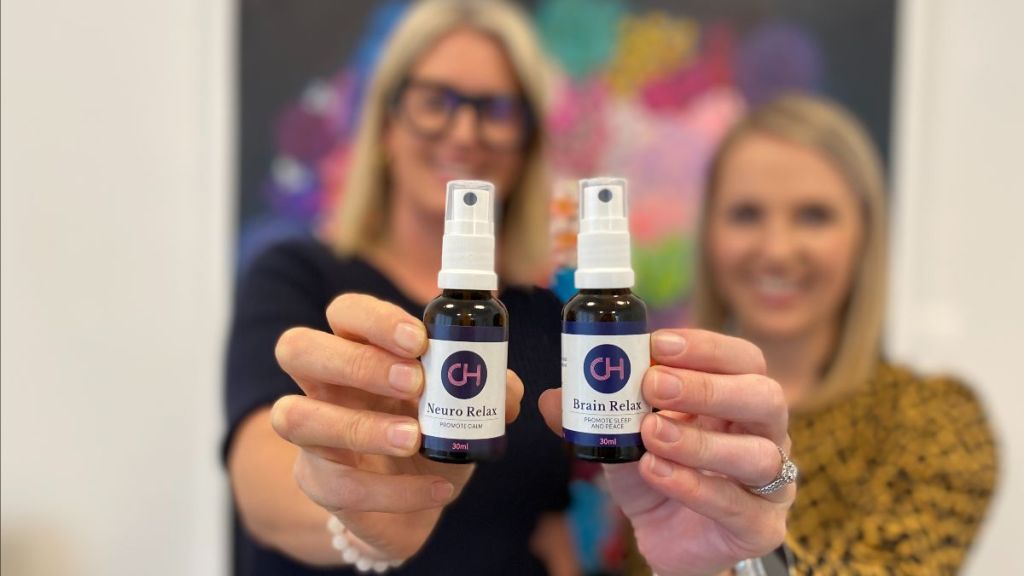
So how do we get back into balance and turn on the parasympathetic nervous system, from which we can rest and heal? Well the fact that you’ve read this far means you are looking for some ways to reduce stress in your life and that’s fantastic. We encourage our patients to book in with us on a regular basis for wellness appointments, but unfortunately stress can be a daily occurrence, even just tuning into the 6pm news (*hint- avoid). So what are some practices you can implement in between wellness treatments? Firstly, if you haven’t heard of our ‘Neuro Relax’ homoeopathic spray I have linked this below as this is something physical you can take during times of stress, sleeplessness and anxiety. This supports GABA production in our body. GABA being our neurotransmitter that promotes a sense of peace and calm.
Secondly, because we can become addicted to the feelings of stress (our body craves the familiar) we can end up going back to old habits and choices so it’s key that if you want to reduce stress to make long term commitments to change.
“If you resist the cravings, the temptations, the voices, and the body’s urges long enough, you can begin to take back control of your body and its unconscious drivers. Every time you overcome those cravings and the voices that tell you to make decisions that are not ultimately loving to you, you are exerting your conscious will over your body and conquering an aspect of yourself.”
(Dr Joe Dispenza)What else should we consider?
Changing the way you eat, perhaps reducing caffeine and alcohol intake. Implementing a regular exercise regime. Making more space in your day to settle your nervous system i.e. meditation or some other form of relaxation. Starting yoga or booking in for some breathwork sessions. Going for regular massages. Getting adequate sleep. A big one is also being mindful of who and what you are putting your energy into each day. Are you around people constantly who induce anxiety provoking thoughts? What about what you are consuming? TV puts us into a hypnotic state so we also need to be mindful what messages we are feeding our subconscious mind that we might not be aware of by what we are viewing.

Lastly, a tool to use.
The Freeze Frame technique was created by the HeartMath Institute, which was set up in the early 1990s to study the role of the physical heart in health and wellbeing.
It has been taken up around the world, including by all four branches of the U.S. military. So when people are in battle trauma or stress they can use this to reset themselves ‘in the moment’.
You can use Freeze Frame any time you are experiencing stress in your body or your mind. It will help you to feel better almost immediately — usually in less than a minute.
Read through this technique several times first and practise the whole sequence as many times as you wish until you know you have memorised it well enough that it is almost automatic when you actually need to use it.
First of all, check how your anxiety level is on a scale of one to ten, one being the lowest and ten being the highest.
1. Become aware that you are experiencing a stressful feeling in your body or that your mind is racing.
2. Put your hand on your heart and focus your energy into this area. Take at least three slow and gentle breaths into your heart, maintaining your focus on the feeling of your hand in the centre of your chest.
3. Now, recall a time when you felt really good — a time you felt love, joy or real happiness. Return to that memory as if you are back there again right now. See what you saw, hear what you heard, and feel how good you felt.
4. As you feel this good feeling in your body, imagine your heart could speak to you. Ask your heart how you could take better care of yourself in this moment and situation.
5 Listen to what your heart says in answer to your question and act on it as soon as you can. Now, consider your anxiety level again on that scale of one to ten. You should now find that it’s lower. If it’s not yet as low as you want, then repeat the technique until it is.
(By Paul McKenna for the Daily Mail , 2 January 2023)